

Errors on your Credit Report? Here’s how to Dispute them
Maintaining an accurate credit report is essential for financial health and can influence a person’s ability to secure credit, loans, and favorable interest rates. Errors on credit reports can occur, and when they do, they can have a detrimental impact on a person’s creditworthiness. This guide to disputing errors on your credit report will help make the information presented accurate and representative of your true financial history.
Review Your Credit Report
The first step is to obtain a copy of your credit report. By law, you are entitled to one free credit report annually from each of the three major credit bureaus: Equifax, Experian, and TransUnion. You can request these reports through AnnualCreditReport.com, the only authorized source for free credit reports.
Once you receive your credit reports, examine each one thoroughly. Pay close attention to the following details:
Personal Information: Check to be sure your name, address, Social Security number, and other identifying information is correct.
Account Information: Review the details of your credit accounts, including open and closed accounts, balances, and payment histories.
Public Records: Check for any bankruptcies, tax liens, or judgments that may be inaccurately reported.
Inquiries: Verify the list of entities that have requested your credit report. Check to be sure they are legitimate and authorized entities.
Identify and Document Errors
If you discover inaccuracies on your credit report, it is crucial to document them carefully. Be sure to gather evidence that supports your dispute.
Record the Error Details: Write down the specific details of the inaccuracies, including the account name, account number, and the nature of the error. This would include an incorrect balance, any missed payments, or an account not recognized).
Gather Supporting Documentation: Collect all documents that substantiate your claim, such as bank statements, payment records, or correspondence with the creditor. These documents will serve as evidence during the dispute process.
Dispute the Error
There are several ways to initiate a dispute:
Online: Many credit reporting agencies offer online portals where you can submit your dispute electronically. This method is not only convenient but also allows you to upload supporting documentation as well.
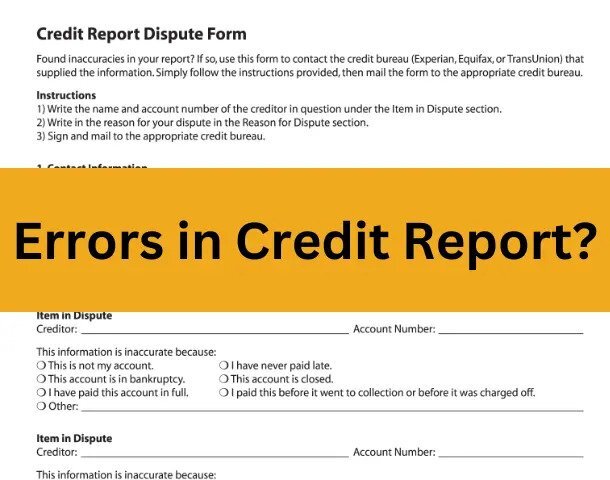
Mail: You can send a written dispute to the credit reporting agency. Prepare a formal letter outlining the error, providing all relevant details, and attaching copies of supporting documents. Be sure to send your dispute via certified mail with a return receipt so you have proof of delivery.
Contact the Creditor: In some cases, it may be more effective to contact the creditor directly to address the error. If the creditor acknowledges the mistake, they can notify the credit reporting agencies to update your report.
Use a Dispute Resolution Service: There are some legitimate organizations and credit repair companies that specialize in services to help consumers dispute credit report errors. However, be cautious when using these services because many are not legitimate and you can dispute errors on your own for free.
Credit Bureau Investigation
Once a dispute is received by the credit reporting agency, it is obligated to investigate the error promptly, typically within 30 days. The investigation process involves:
A Review of Your Dispute: The credit bureau will review the details provided in your dispute, including any supporting documentation.
The Creditor will be Contacted: The credit bureau will contact the creditor or data furnisher associated with the disputed information. The creditor has the responsibility to verify the accuracy of the information.
Resolution: Once the investigation is complete, the credit bureau will notify you of the outcome. A written report will be sent summarizing the results and any updates to your credit report. If the error is corrected, your credit report will be updated to reflect the accurate information.
Review the Outcome
Once the credit bureau has conducted its investigation, you should review the outcome and any updates made to your credit report. If the error was corrected to your satisfaction, this concludes the process. However, there are additional steps you can take if you are not satisfied with the outcome:
Request a Dispute Statement: If the credit bureau does not remove the disputed information, you have the option to request that a statement of dispute be added to your credit report. This statement provides your perspective on the disputed item and remains on your report for seven years.
Following Up: If the error persists after the initial dispute, consider following up with both the credit bureau and the creditor. Provide additional evidence if available, and emphasize the importance of correcting the error.
Possible Legal Action: In extreme cases where the error is causing significant harm and is not being corrected, you may need to seek legal assistance. Consult with an attorney who specializes in credit reporting disputes.
You have the right to dispute errors on your credit report so that it reflects an accurate and reliable financial history. Inaccurate information can negatively impact your creditworthiness, and affect your ability to secure credit, loans, and favorable interest rates.
Remember that patience and persistence may be necessary when dealing with credit report disputes, but the potential benefits to your financial future will make the effort worthwhile.